Cranes
Inspection support for accessible crane components, controls, lifting mechanisms and safety devices.
- Overhead and bridge cranes
- Gantry cranes
- Jib cranes
- Mobile lifting equipment where applicable
- Crane hooks and blocks
AMS Global Technologies provides structured visual, functional and condition inspection support for cranes, hoists, lifting appliances, lifting accessories, cargo lifts, passenger lifts and fall-protection equipment. Final scope is confirmed according to equipment type, safe working load, condition and site requirements.
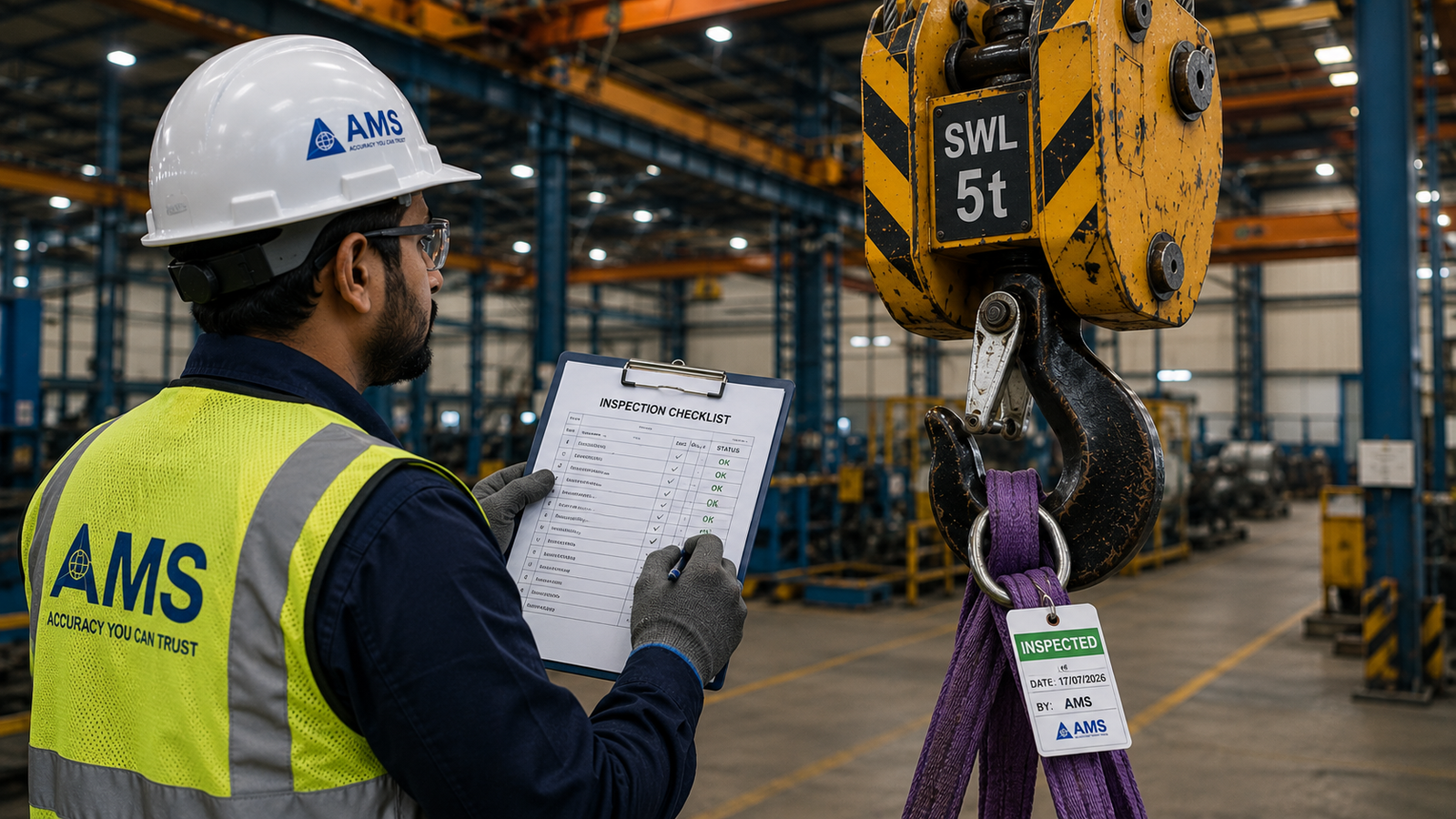
Lifting equipment can be exposed to repeated loading, impact, wear, corrosion, deformation, poor lubrication, damaged controls and unauthorized modifications.
A structured inspection helps identify visible defects, operational concerns, damaged components, missing markings and conditions that may require repair, replacement or further examination.
Inspection availability remains subject to equipment type, technical information, safe access, site conditions and the agreed inspection scope.
Inspection support for accessible crane components, controls, lifting mechanisms and safety devices.
Visual and functional inspection of manual and powered lifting devices.
Inspection of accessible lift components and safety functions subject to applicable requirements.
Condition inspection of structural lifting devices, lifting points and attachments.
Inspection of lifting accessories for wear, damage, deformation and identification.
Visual inspection of fall-protection equipment for visible damage and identification.
The actual checklist is selected according to equipment design, manufacturer information, operating condition and the agreed inspection level.
Visible cracks, corrosion, deformation, damaged welds, loose fasteners and unauthorized alterations.
Wear, broken wires, elongation, damaged links, cuts, abrasion, heat damage and identification.
Control operation, emergency stop, brakes, pendant condition, travel controls and limit functions.
Equipment identification, safe working load, warning labels, previous inspection information and available documentation.
The workflow is adjusted according to equipment quantity, location, shutdown availability, access and testing requirements.
Client shares equipment type, quantity, capacity, manufacturer, location and available records.
Access, isolation, permits, operational limits and inspection requirements are confirmed.
Accessible structural, mechanical, lifting and safety components are visually examined.
Controls and selected functions are checked where safe, permitted and included in scope.
Findings, observations, equipment condition and recommended actions are recorded.
Inspection records may include equipment identification, safe working load, observed condition, component findings, photographs, limitations and recommended corrective actions.
Final report format and inspection status depend on the agreed scope, equipment condition and applicable project requirements.
Equipment isolation, safe access, responsible site personnel, operating permission and suitable working conditions should be confirmed before inspection starts.
General guidance about crane inspection, hoist inspection, accessories, load testing and reporting.
Share equipment type, quantity, capacity, location, manufacturer, photographs and required inspection date.
Submit Equipment ListInspection may cover cranes, manual and electric hoists, cargo or passenger lifts, lifting beams, slings, shackles, hooks, lifting accessories and safety harnesses, subject to technical review.
No. Load testing is a separate controlled activity and must be specifically included in the quotation and inspection plan.
Many inspection activities require the equipment to be stopped, isolated and made accessible. Limited operational checks may be performed only under controlled conditions.
Examples include cracks, excessive wear, deformation, damaged ropes or chains, missing hook latches, defective controls, corrosion, loose fasteners and missing capacity markings.
The agreed documentation may include equipment identification, inspection findings, observed defects, photographs, limitations and recommendations.
Frequency depends on equipment type, usage, risk, manufacturer guidance, operating environment, previous findings and applicable regulatory or client requirements.
The applicable scope and current capability should be confirmed before work. Refer to the original certificate and the agreed inspection quotation for exact coverage.
Share the equipment type, quantity, capacity, manufacturer, photographs, site location and required inspection date. Our technical team will review the requirement and coordinate the next step.